Skip to content

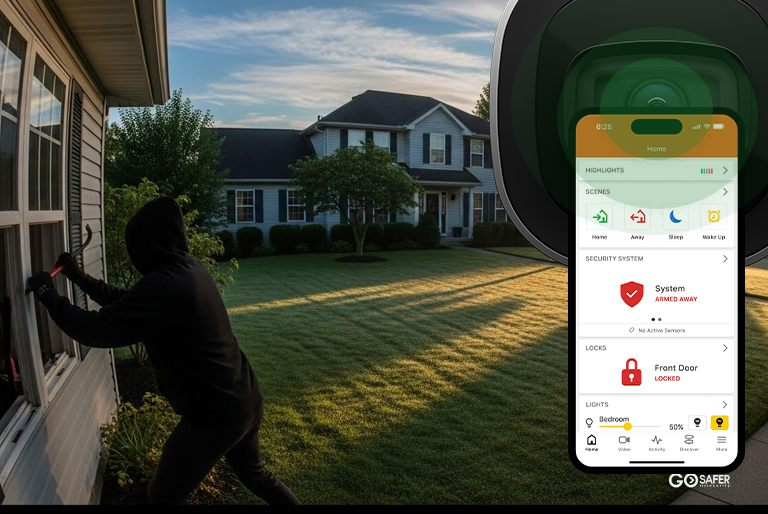
With smarter cities, connected homes, and AI becoming part of everyday life, residential security is undergoing a massive transformation driven by advanced technologies. Now, home security is no longer just about locking doors or installing cameras. It’s evolving into an intelligent ecosystem that thinks, predicts, and reacts sometimes before you even realize there’s a threat. Imagine your home acting like a quiet guardian, always alert, never intrusive.
Table of Contents
ToggleWhat’s Driving Innovation in Home Security?
Rise of AI, IoT, and Cloud Computing
The marriage of artificial intelligence, Internet of Things (IoT), and cloud platforms has created security systems that learn patterns instead of just reacting to alarms. These systems analyze behavior, detect anomalies, and continuously improve.
Changing Homeowner Expectations
Homeowners now want security that’s:
- Seamless
- Personalized
- Proactive
- Privacy-focused
Nobody wants a system that cries wolf every night.
Convenience vs. Protection Balance
The real challenge? Delivering strong protection without sacrificing comfort. The latest technologies are finally cracking that code.
1. AI-Powered Predictive Security Systems
How Predictive Analytics Prevent Crime
Instead of waiting for something bad to happen, predictive security systems analyze patterns, movement, time, and behavior to anticipate risks. It’s like weather forecasting for safety.
Real-World Use Cases in Smart Homes
These systems can:
- Flag unusual nighttime activity
- Detect repeated loitering
- Adjust alert sensitivity automatically
This aligns closely with insights discussed in future trends and predictions in home security systems, where proactive defense takes center stage.
2. Facial Recognition with Behavioral Analysis
Beyond Face Matching – Facial recognition in 2026 isn’t just about who you are; it’s about how you move, act, and behave. Systems can detect stress, urgency, or suspicious behavior.
Privacy-First AI Models – Modern systems process data locally whenever possible, reducing privacy risks while maintaining accuracy.
3. Hybrid Cloud Home Security Platforms
Why Hybrid Cloud Is the New Standard – Hybrid cloud systems combine local storage with cloud intelligence. You get speed, reliability, and advanced analytics all without full dependence on the internet.
Local Control with Cloud Intelligence – This approach is explored in detail in AI-driven hybrid cloud security solutions for smarter homes, showing how homeowners gain both control and scalability.
4. Smart Perimeter Security and Virtual Fencing
Invisible Boundaries for Real Protection – Forget physical fences. Virtual perimeters use sensors, cameras, and AI to create invisible security zones around your property.
AI-Based Intrusion Detection – These systems differentiate between a stray animal and a real threat, dramatically reducing false alarms.
5. Biometric Access Control for Homes
Fingerprint, Retina, and Vein Recognition – Keys are becoming obsolete. Biometric access ensures only authorized individuals can enter; no copying, no guessing.
Goodbye Keys, Hello Identity-Based Entry – Your body becomes the key. Simple. Secure. Nearly impossible to fake.
6. Autonomous Security Drones and Patrol Devices
Eyes in the Sky for Residential Areas – Small, quiet drones can patrol large properties, providing real-time video and thermal imaging.
Night Vision and Thermal Imaging – Perfect for low-light environments and large estates, these tools act as mobile security guards.
7. Smart Glass Break and Acoustic Sensors
Sound-Based Threat Detection – These sensors recognize specific sound frequencies like glass shattering or forced entry.
Reducing False Alarms with AI – AI filters out harmless noises, focusing only on real threats.
8. Cyber-Physical Home Security Integration
Protecting Digital and Physical Assets Together – Smart homes face both physical and cyber threats. Integrated systems secure networks, devices, and entry points together.
Securing Smart Home Networks – One weak device can compromise everything. Unified security platforms close that gap.
9. Voice-Activated Emergency Response Systems
Hands-Free Help During Emergencies – Can’t reach your phone? Voice-activated systems can call for help instantly.
AI That Understands Stress and Tone – Advanced AI recognizes panic or distress, triggering faster responses when seconds matter.
10. Energy-Efficient and Sustainable Security Tech
Solar-Powered Cameras and Sensors – Security no longer means higher energy bills. Solar-powered devices are reliable and eco-friendly.
Green Security Is the Future – Sustainability is no longer optional; it’s a priority.
How Homeowners Can Prepare for These Technologies
Planning Smart Upgrades – You don’t need to upgrade everything at once. Start with scalable systems that grow with your needs.
Choosing Scalable Security Solutions – Look for modular platforms that integrate new features without replacement.
Final Thoughts on Home Security in 2026
Home security in 2026 is smarter, better for the environment, and more focused on people’s needs than it has ever been. These new technologies put trust, control, and peace of mind ahead of fear. The future of home security isn’t coming; it’s already here.